
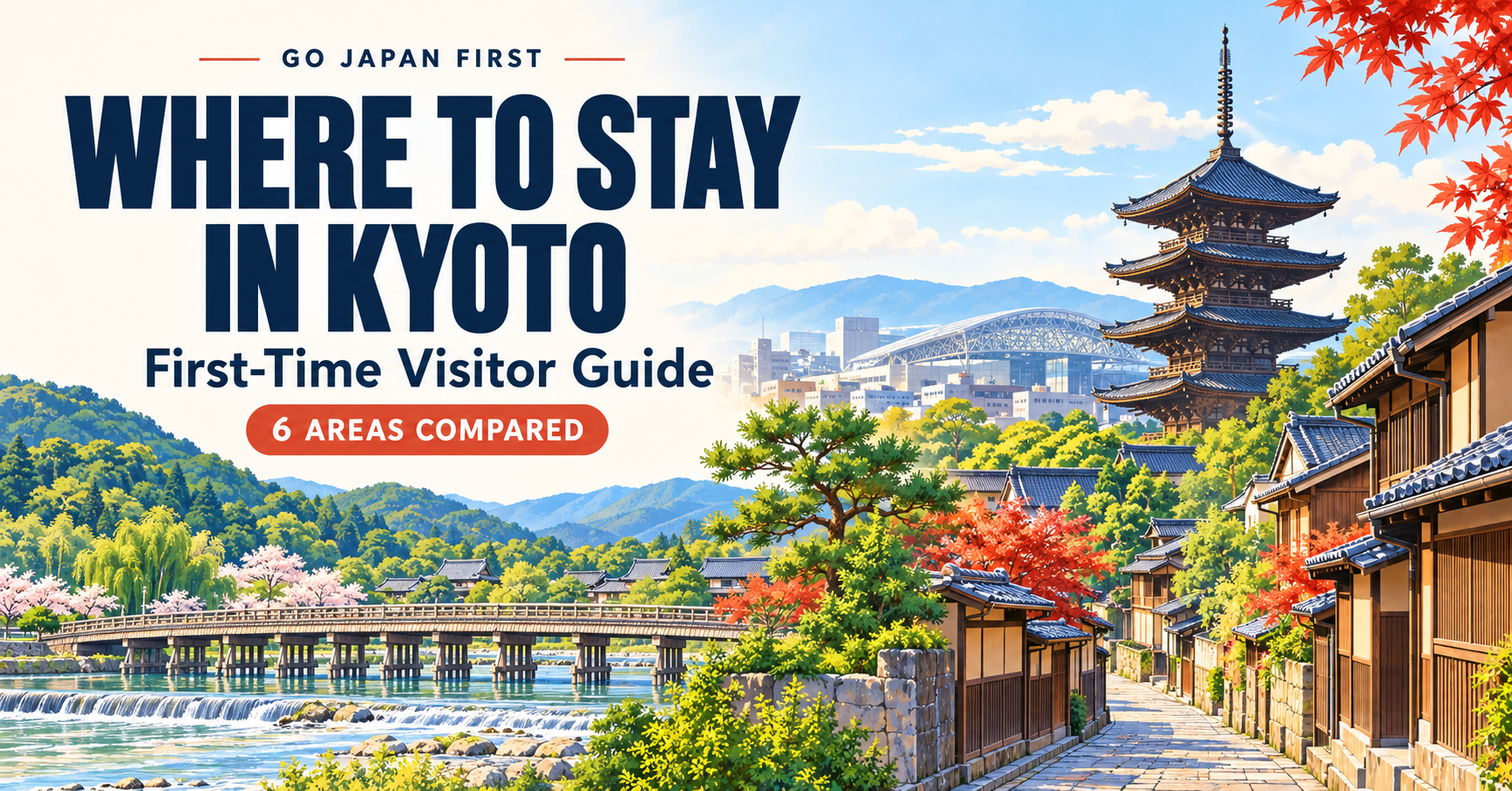
For a first visit to Kyoto, start by comparing Kyoto Station, Shijo-Kawaramachi, and Shijo-Karasuma. Choose Kyoto Station when arrival and departure logistics matter most, Shijo-Kawaramachi when you want to spend your evenings downtown, or Shijo-Karasuma when a subway connection and access to Hankyu trains suit your plans.
Gion and southern Higashiyama, the Karasuma Oike and Nijo Castle area, and Arashiyama are also worth considering for different itineraries. This guide compares six practical bases, explains the station names to check, and gives you a booking checklist. The right choice depends on your hotel address and daily plans, rather than a district name alone.
Research note: Official tourism and transport information was checked on October 5, 2026. Our area recommendations are editorial judgments about itinerary fit, rather than personal hotel reviews. Confirm current routes, prices, and property policies before booking.
Where to Stay in Kyoto: Quick Answer
If you have not settled your itinerary, shortlist one hotel near Kyoto Station and one downtown. Compare the actual journeys from each property to your planned stops, including the trip back after dinner.
- Kyoto Station: Consider it when a Shinkansen arrival, airport connection, or onward journey shapes your stay.
- Shijo-Kawaramachi: Consider it for downtown shopping, dining, and evenings around the river.
- Shijo-Karasuma: Consider it when access to the Karasuma subway line and Hankyu railway matters.
- Gion and southern Higashiyama: Consider it when eastern Kyoto’s historic streets and temples are a priority.
- Karasuma Oike and Nijo Castle: Compare properties here when subway connections or a stay around the castle suit your plans.
- Arashiyama: Consider it when time in western Kyoto is an important part of the stay, rather than just one sightseeing stop.
Affiliate disclosure: We may earn a commission if you book through the Expedia link below.
Ready to compare Kyoto hotels?
Search for your travel dates, then check each hotel’s location, room details, and cancellation terms before booking.
Browse Kyoto hotels on ExpediaCompare Six Kyoto Hotel Areas
These are practical search areas, rather than official hotel zones. Shijo-Kawaramachi and Shijo-Karasuma are both downtown, but their station connections differ. Likewise, a hotel near Karasuma Oike is not automatically a short walk from Nijo Castle.
| Area | Consider it for | Station names to check | Main trade-off |
|---|---|---|---|
| Kyoto Station | Arrival and onward travel | Kyoto | Check the correct station side and your evening plans |
| Shijo-Kawaramachi | Downtown meals and shopping | Kyoto-kawaramachi; Gion-shijo across the river | Check the walk and transfers from your arrival route |
| Shijo-Karasuma | Subway and Hankyu access | Shijo; Karasuma | The station entrance nearest the hotel matters |
| Gion / southern Higashiyama | Historic streets and eastern sightseeing | Gion-shijo or Kiyomizu-gojo, depending on the address | Check the final walk, terrain, and luggage access |
| Karasuma Oike / Nijo Castle | Subway connections and castle-area stays | Karasuma Oike; Nijojo-mae | These are different locations; check your exact base |
| Arashiyama | A stay focused on western Kyoto | JR Saga-Arashiyama; Randen or Hankyu Arashiyama | Check cross-city journeys and evening dining options |
On a small screen, swipe sideways to see the full comparison.
Kyoto Station: Start Here for Arrival and Departure Logistics
Kyoto Station serves Shinkansen and conventional JR lines. JR-WEST’s Kansai Airport travel guide also describes direct access to Kyoto on the HARUKA airport express. For a short stay with substantial luggage, a hotel near your arrival route is a useful starting point.
Check the station side before booking. The Central Exit is on the north side, while the Hachijo Exit is on the south. A hotel’s advertised distance to the station does not necessarily describe the walk from your platform or the exit you will use.
Shortlist a property here if it makes your first and last travel days easier. Then test whether its location also works for the days between them. For example, if dinner plans repeatedly take you downtown, include the return journey in your comparison.
Shijo-Kawaramachi: Consider It for Downtown Evenings
The Shijo area is a major shopping and dining district, with Nishiki Market among central Kyoto’s attractions. Shijo-Kawaramachi is worth comparing if you want your hotel to be close to the part of town where you expect to spend evenings, rather than returning there from another base each night.
The key railway names are Hankyu Kyoto-kawaramachi and Keihan Gion-shijo across the river. Do not assume Kyoto-kawaramachi is a subway station or that these lines depart from Kyoto Station. Plan your arrival to the actual hotel address.
If a listing emphasizes nightlife or restaurant access, also read recent comments about room noise. Ask about the room’s position when sound sensitivity matters. Convenience after dinner and a restful night are separate booking questions.
Shijo-Karasuma: Compare It for Subway and Hankyu Connections
Shijo is the subway station; Karasuma is the Hankyu station. They connect by an underground passage. The subway’s Karasuma Line connects this area with Kyoto Station, while Hankyu services connect downtown Kyoto with Osaka-Umeda. Check Hankyu’s Karasuma station information for the layout.
This is a useful comparison area if you want a downtown base but expect to use those rail connections regularly. Treat that as a reason to shortlist hotels, then test it against your own destinations. Access to two operators does not mean every sightseeing trip will be direct.
For luggage or a stroller, identify the entrance with a suitable elevator route. The nearest entrance on a booking map may not be the entrance you can comfortably use.
Gion and Southern Higashiyama: Consider It for Eastern Kyoto
Gion and the Kiyomizu area bring together historic streets, temples, shrines, and traditional architecture. Yasaka Shrine and Kiyomizu-dera are among the area’s major sights. A stay here is worth comparing when you want this part of Kyoto to shape your mornings and evenings.
Use the address, rather than the word Higashiyama, to judge access. Hotels marketed under that broad name can have different walks and useful stations. Check Gion-shijo or Kiyomizu-gojo where appropriate, and inspect the route between your chosen station and the property.
Ask about stairs, vehicle access, and luggage storage if these affect your group. A traditional-looking exterior does not tell you whether the building has an elevator, private bathroom, or staffed reception. Follow local access and photography signs when exploring surrounding streets.
Karasuma Oike and Nijo Castle: Choose the Specific Station First
Karasuma Oike is the interchange between Kyoto’s Karasuma and Tozai subway lines. Nijojo-mae, the station associated with Nijo Castle, is a separate stop on the Tozai Line. These locations offer different reasons to shortlist a hotel: the interchange itself or a stay around the castle.
If a quieter setting matters, compare individual side-street properties and their recent reviews. The official accommodation guide describes the broader castle and Imperial Palace area as relatively quiet, but that does not establish the noise level of a particular room.
Also distinguish Nijojo-mae from Nijo Station. Before booking, search using the precise station named in the hotel’s access instructions. Similar names can conceal a different arrival walk or transfer.
Arashiyama: Consider It When Western Kyoto Is a Priority
Arashiyama is known for its bamboo forest and Togetsu-kyo Bridge. A hotel here is worth comparing when the western part of Kyoto is a major reason for your stay. For an itinerary spread across the city, first compare how the extra journeys would affect your days.
The station choice matters: JR Saga-Arashiyama, Randen Arashiyama, and Hankyu Arashiyama are different stops. Kyoto’s official Arashiyama access guide explains the JR, subway-and-Randen, and Hankyu approaches. Match the route to your hotel’s location rather than choosing a train by the area name alone.
Check dinner arrangements before reserving. Kyoto’s official accommodation guide notes that restaurants and cafes here tend to close early. A stay including meals may suit some travelers, but confirm the specific package, meal times, and alternatives for your dates.
Choose Your Base by Your Actual Itinerary
A useful shortlist starts with three journeys: arrival, a representative sightseeing day, and departure. Add the return from dinner if you expect to eat outside the hotel most nights.
- A short stop between rail journeys: Compare a Kyoto Station hotel first, then a downtown alternative. Decide whether easier luggage handling outweighs the extra trips for sightseeing or dinner.
- A stay centered on downtown evenings: Compare Shijo-Kawaramachi and Shijo-Karasuma. Look at both your preferred evening streets and the rail connections you will actually use.
- A stay centered on one part of Kyoto: Compare Gion and southern Higashiyama for eastern plans, or Arashiyama for western plans. Test at least one trip outside that area before committing.
For a family or anyone with mobility needs, repeat the comparison using the routes you can comfortably manage. Count walking, station transfers, and luggage handling, rather than only the time spent on a train.
What to Check Before Booking a Kyoto Hotel
1. The Final Walk to the Property
Inspect the hotel’s entrance and the walking route from the station exit you will use. If stairs, slopes, or an elevator are important, confirm those details with the property. Save its address and access instructions for arrival; a map pin alone may not identify the entrance.
2. A Transport Plan That Uses More Than Buses
Kyoto’s official transport advice encourages using trains and subways, with a bus or walk for the final section where needed. Check alternatives before choosing a hotel whose appeal depends entirely on one bus route. A property beside a bus stop can still involve waiting, traffic, or a transfer.
3. Room Size, Beds, and Child Policies
Check the exact room category, floor area, bed dimensions, and maximum occupancy. For children, confirm whether bed sharing is allowed and whether breakfast or extra bedding costs more. For a ryokan or townhouse-style property, ask about stairs, bathrooms, sleeping arrangements, and reception availability before relying on the photos.
Want a private hot spring bath during your Kyoto stay? Compare our Kyoto hotels with private onsen guide to check four hotels, the room categories to book, and separate private spa fees.
4. Luggage Storage and Arrival Times
Confirm whether the property can hold bags before check-in or after checkout. Kyoto’s official luggage guide lists storage and delivery options, including services between Kyoto Station and accommodation. Check operating hours, delivery cutoffs, and whether your hotel participates. Avoid assuming same-day delivery is available for every arrival.
5. The Total Price, Including Accommodation Tax
Kyoto City’s accommodation tax rates changed on March 1, 2026. The applicable amount depends on the accommodation fee per person per night. Read the official tax information and ask whether the tax is included in your booking total or payable separately.
Compare equivalent offers: the same travel dates, occupants, room type, meal plan, and cancellation conditions. A lower headline rate is not a complete comparison if one offer excludes something you need. Keep the confirmation showing the total and any charges due at the property.
6. Cancellation and Late Check-in Conditions
Check the cancellation deadline, the time zone used for it, payment timing, and any non-refundable conditions. If your flight or train arrives late, confirm the reception or self-check-in procedure. A hotel close to a station is useful only when your arrival route and the property’s check-in arrangements both work.
Frequently Asked Questions
Is Kyoto Station or Downtown Better for a First Visit?
Start with Kyoto Station when arrival and onward travel are your main constraints. Compare downtown when evenings there are a priority. Our recommendation is to test one hotel in each area against the same itinerary before booking; neither location removes the need to travel around Kyoto.
Is Gion a Good Place to Stay?
It is worth comparing when Gion and eastern Kyoto are central to your plans. Check the exact address, useful station, arrival walk, and property facilities. The area’s appeal does not guarantee that every hotel there will suit a traveler with substantial luggage or mobility needs.
Are Shijo-Kawaramachi and Shijo-Karasuma the Same Area?
Both are downtown, but they are different search locations. Shijo-Karasuma has the Shijo subway and Karasuma Hankyu stations. Shijo-Kawaramachi has Hankyu Kyoto-kawaramachi, with Keihan Gion-shijo across the river. Compare a hotel’s actual entrance and route rather than treating these names as interchangeable.
Should I Stay in Arashiyama or Visit It from Another Base?
Compare a stay there when western Kyoto or the accommodation itself is a priority. If Arashiyama is only one stop in a broader itinerary, first test visiting from your city base. Before splitting a short stay between hotels, account for packing, luggage handling, and check-in times.
Which Kyoto Area Has the Cheapest Hotels?
This guide does not rank districts by price. Compare available properties for your actual dates and requirements, including taxes and travel costs. If one hotel saves money but adds transfers or offers a room that does not suit your group, consider those differences before choosing it.
Visiting Tokyo on the same trip? Our guide to where to stay in Tokyo for first-time visitors compares six Tokyo bases using the same itinerary-first approach.
Official Planning Sources
Use these official resources to confirm transport and destination details for your travel dates. The hotel-selection advice and shortlist examples above are our editorial interpretation of the information.
- Kyoto Travel: accommodation area overview, central Kyoto, Gion and Kiyomizu, and Saga and Arashiyama.
- Kyoto Travel: rail and subway guidance and Kyoto Station navigation guide.
- Kyoto City: subway station layouts. Hankyu Railway: Karasuma and Kyoto-kawaramachi station information.
- Keihan Railway: official maps and station-area guides.
Planning a week in Japan? Follow our 7-day Japan itinerary for first-time visitors to plan your Tokyo and Kyoto sightseeing, hotel nights, and arrival and departure airports.








Comments