
Choosing where to stay in Tokyo for your first visit starts with your itinerary. A hotel near the places you want to explore, with a manageable airport transfer and an easy walk from the station, can make your trip much simpler.
This guide compares six useful areas: Shinjuku, Shibuya, Tokyo Station, Ginza, Ueno, and Asakusa. Each suits a different kind of trip. Use the comparison to choose an area, then check individual hotels against your dates, room requirements, and budget.
Research note: This is a planning guide based on official tourism and transport information, checked on October 2, 2026. The recommendations are our editorial judgments about itinerary fit, rather than personal hotel reviews. Confirm current services and booking conditions with the relevant provider.
Where to Stay in Tokyo: Quick Answer
Start by comparing Shinjuku and Tokyo Station if your itinerary is still broad. Shinjuku is worth considering for shopping, dining, nightlife, and exploring western Tokyo. Tokyo Station is worth considering if an onward Shinkansen journey is a major part of your plans.
- Shinjuku: Consider it for a varied itinerary and evenings around restaurants and entertainment.
- Shibuya: Consider it for fashion, cafes, and an itinerary focused on Shibuya and nearby western districts.
- Tokyo Station: Consider it when onward rail travel and a convenient departure morning are priorities.
- Ginza: Consider it for department stores, dining, and a base served by several subway lines.
- Ueno: Consider it for museums, Ueno Park, and a Narita arrival using the Keisei Skyliner.
- Asakusa: Consider it for Sensoji Temple, traditional shopping streets, and riverside sightseeing.
The deciding factor should be the specific hotel’s location. A recognizable district name does not tell you how far you will walk, which station entrance you will use, or whether the room works for your group.
Affiliate disclosure: We may earn a commission if you book through the Expedia link below.
Ready to compare Tokyo hotels?
Search for your travel dates, then check each hotel’s location, room details, and cancellation terms before booking.
Browse Tokyo hotels on ExpediaCompare Tokyo’s Main Hotel Areas
| Area | Consider it for | Main trade-off to check |
|---|---|---|
| Shinjuku | Shopping, dining, and nightlife | A large station and a hotel location that suits your noise preferences |
| Shibuya | Fashion, cafes, and western Tokyo | Busy streets and the walk from your train line to the hotel |
| Tokyo Station | Onward Shinkansen travel | The correct station side and the walk to your departure platforms |
| Ginza | Shopping, dining, and subway access | The nearest station may be Ginza, Higashi-Ginza, Ginza-itchome, or Yurakucho |
| Ueno | Museums, parks, and Narita access | JR Ueno and Keisei-Ueno are separate stations |
| Asakusa | Temple streets and riverside sightseeing | Check journeys to western Tokyo if you plan to visit it repeatedly |
Shinjuku: A Useful Starting Point for a Varied Itinerary
Shinjuku combines a major transport hub with department stores, restaurants, and nightlife. The area changes around the station: Nishi-Shinjuku lies to the west, the east side leads toward shopping and entertainment, and the south side includes shopping complexes and the expressway bus terminal.
Our recommendation is to compare the actual street and station exit before choosing a hotel here. If you want lively evenings, proximity to entertainment may be useful. If sleep is your priority, look closely at recent noise reviews and the hotel’s surroundings. Leave room in your arrival plan for finding the right exit with luggage.
Area reference: GO TOKYO’s official Shinjuku guide.
Shibuya: For Fashion, Cafes, and Western Tokyo
Shibuya is known for its scramble crossing, fashion, shopping, cafes, and entertainment. Its station serves JR, private railway, and subway services, making it worth comparing when your plans concentrate on Shibuya, Harajuku, Omotesando, and other western districts.
Considering Shinjuku or Shibuya for your Tokyo stay? Read our Shinjuku vs Shibuya hotel-area comparison to compare station access, hotel locations, room value, and evenings before booking.
Choose it because you want to spend time in the area, rather than only because the crossing is famous. Check the route from the platforms you will use to your hotel entrance. A hotel near the station on a map may still involve a walk through the station and crowded streets.
Area reference: GO TOKYO’s official Shibuya guide.
Choosing Shibuya as your base? Compare specific properties in our guide to six hotels near Shibuya Station, including station exits, room sizes and options with in-room laundry.
Tokyo Station: For an Easier Onward Rail Journey
Tokyo Station is a major hub for local and long-distance rail travel. Marunouchi is on the west side, toward the Imperial Palace; Yaesu is on the east side. The surrounding area also has shops and restaurants.
We would put it on the shortlist when catching a Shinkansen is an important part of the trip. The Tokaido Shinkansen connects Tokyo with Kyoto and Shin-Osaka. A hotel with a straightforward route to your departure gates can reduce the amount of luggage handling on that morning. Check the station side and route carefully: “near Tokyo Station” does not mean “beside my platform.”
If Tokyo Station is already your preferred base, compare hotels near Tokyo Station by exit and Twin room to match the arrival route with a room for two people who want separate beds.
References: GO TOKYO’s Tokyo Station and Marunouchi guide and JR Central’s official Shinkansen travel site.
Ginza: For Shopping, Dining, and Subway Connections
Ginza is a shopping and dining district with department stores, boutiques, and galleries. Ginza Station serves the Ginza, Marunouchi, and Hibiya subway lines. Depending on your hotel’s address, Higashi-Ginza, Ginza-itchome, or JR Yurakucho may be more useful.
Consider it if shopping and meals in central Tokyo feature heavily in your plans. Compare hotels by their nearest useful station, rather than treating the whole district as one location. If you also need Tokyo Station, check that journey separately with luggage. Read recent reviews for the particular hotel instead of assuming every Ginza property has the same atmosphere or room standard.
Area reference: GO TOKYO’s official Ginza guide.
Ueno: For Museums, Parks, and Narita Airport Access
Ueno Park and its museums make Ueno a useful area to consider for a culture-focused trip. Ameyoko adds a busy shopping area between Ueno and Okachimachi. JR and subway connections serve Ueno, while the Keisei Skyliner connects Narita Airport with Keisei-Ueno.
The airport connection makes Ueno worth comparing if you arrive at Narita and intend to use the Skyliner. Keisei-Ueno and JR Ueno are separate stations. Check the walk from the station your airport train actually uses. For a budget-led search, compare Ueno and nearby Okachimachi alongside other areas using the same dates and room requirements; do not assume the district name guarantees a lower rate.
References: GO TOKYO’s official Ueno guide and Keisei’s official Skyliner information.
Asakusa: For Temple Streets and Riverside Sightseeing
Asakusa centers on Sensoji Temple, Kaminarimon, and the Nakamise shopping street. The nearby Sumida River adds another reason to explore the area. Tokyo Metro’s Ginza Line, the Toei Asakusa Line, and Tobu services provide rail access.
Consider staying here if these sights and the surrounding streets are central to your plans. If most of your days are in Shinjuku or other western districts, compare the full journeys before booking. Our recommendation is to balance the neighborhood you want to wake up in with the travel you will repeat each day.
Area reference: GO TOKYO’s official Asakusa guide.
Which Area Fits Your Travel Style?
Start With Your Three Most Important Stops
Put your three main sightseeing priorities on a map. Add your arrival airport and any departure station for the next part of your trip. Then compare two possible hotel areas against those journeys. For each one, look at walking, transfers, and the route home after dinner.
If your priorities cluster around Shibuya and Shinjuku, start your search in western Tokyo. If they cluster around Ueno and Asakusa, start there. When your sightseeing is spread across the city, use the easiest hotel-to-station route and your preferred evening surroundings to break the tie.
Balance Your Budget With the Time You Will Spend Traveling
Compare the total cost for the same dates, number of guests, room type, and cancellation terms. Then consider the extra travel involved. For example, an additional 15-minute walk in each direction adds 30 minutes to every day. Across five days, that is two and a half hours. This is a planning example, not a measured route between particular hotels.
You may happily accept that walk for a room that suits your budget. Another traveler may prefer to pay more for a shorter route. Make the decision using the complete journey, rather than only the nightly rate.
For Families or Travelers With More Luggage
Prioritize the room layout and the arrival route. Confirm how many people the room permits, the number and size of beds, and the hotel’s rules for children. Look for enough usable space for your luggage. If you need step-free access, check both the station route and the hotel entrance directly; an elevator somewhere in the station may not serve the exit you need.
Traveling with three adults? Our guide to Tokyo hotel rooms for three adults compares three regular beds with two beds plus a sofa bed, so you can check each person’s sleeping arrangement before booking.
What to Check Before Booking a Tokyo Hotel
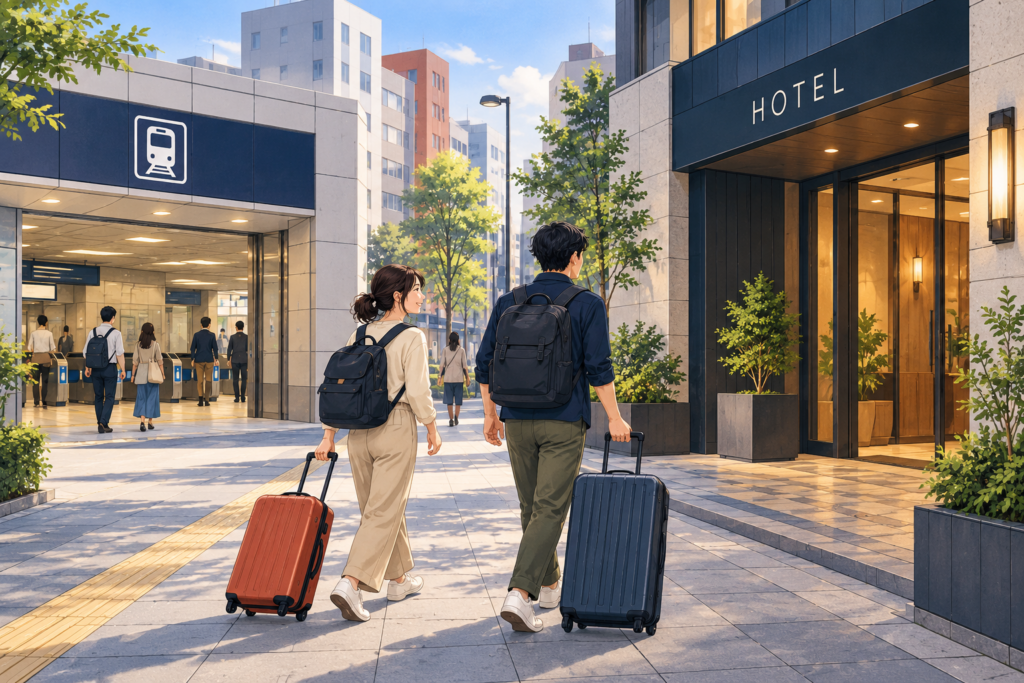
Once you have chosen one or two areas, shortlist individual hotels and work through these checks before paying.
- The exact address and useful station exit. Check the walking route to the hotel entrance, not only the distance to a station symbol on the map.
- The room you are actually booking. Review its size, bed arrangement, bathroom details, and photos. Do not rely on photos of a different room category.
- Occupancy and child policies. Enter every guest correctly and confirm whether extra beds, breakfast, or other services cost more.
- The total payable amount. Check the currency, included services, and any charges shown separately. Compare equivalent rates across providers.
- Cancellation and payment terms. Read the deadline, applicable time zone, refund conditions, and when payment will be taken.
- Check-in arrangements. Confirm reception hours and tell the property if your flight could put you outside its usual arrival window.
- Recent, relevant reviews. Focus on details that matter to you, such as noise, cleanliness, air conditioning, bed comfort, and luggage space.
Check the Airport Journey Before You Commit
Build the route from your actual airport terminal to the hotel. For Narita arrivals, useful options to compare include the JR East Narita Express, which serves Tokyo, Shibuya, and Shinjuku among its destinations, and the Keisei Skyliner for Keisei-Ueno or Nippori. Check the destination and timetable of your chosen service.
For either Narita or Haneda, include time for arrival procedures and collecting luggage. Check whether your intended connection works after you expect to leave the terminal, and make a backup plan if your flight is delayed. A good sightseeing base still needs a workable arrival plan.
For subway planning, use Tokyo Metro’s official subway map alongside the timetable and station information for the operator you will use.
Frequently Asked Questions
What Is the Best Area to Stay in Tokyo for a First Visit?
There is no single best area for every itinerary. Our starting shortlist is Shinjuku for a varied trip with lively evenings, or Tokyo Station when onward rail travel is a priority. Use Shibuya, Ginza, Ueno, or Asakusa when their location and surroundings fit your plans better.
Should I Stay in Shinjuku or Shibuya?
Choose between the actual hotels and the journeys you will repeat. Shinjuku is worth comparing for a broad shopping, dining, and entertainment itinerary. Shibuya is worth comparing when you expect to spend more time around its fashion and cafe scene. Check station exits and evening noise for both.
Which Area Has the Cheapest Hotels?
The lowest available rate depends on your dates, guest numbers, and room requirements. Include Ueno, Okachimachi, and Asakusa in your comparison, then check alternatives elsewhere. Compare the full price and booking terms rather than assuming that one area will always be cheapest.
Do I Need to Stay Near the JR Yamanote Line?
No. A hotel near a subway station can fit your itinerary well, too. For example, Ginza and Asakusa have subway connections. Check routes to your planned stops, the number of transfers, and the walk from the station to your hotel. Choose the connection that serves your trip.
Should I Change Hotels During My Tokyo Stay?
For a short sightseeing stay, our usual recommendation is to keep one base and avoid the work of packing, moving luggage, and checking in again. A change can make sense if your trip has a separate airport night or a clearly different second stage. Compare that benefit with the time the move will take.
Your next step: Choose two areas that fit your itinerary, then compare two or three hotels in each using the same dates and room requirements. Select the property with the best overall balance of location, room suitability, booking terms, and total cost for your trip.
Also visiting Kyoto? Read our guide to where to stay in Kyoto for first-time visitors to compare six hotel areas and choose a base that fits your itinerary.
Planning a week in Japan? Follow our 7-day Japan itinerary for first-time visitors to plan your Tokyo and Kyoto sightseeing, hotel nights, and arrival and departure airports.








Comments